

For much of competitive “Blizzard RTS” history, the map pool size has been defined by the size of the longest competitive series. For StarCraft 2, this has been the Best of 7 (Bo7). Seven games to determine the champions of our biggest events, and seven maps to do that event justice. However, this inherently means that the Bo7 wholly misses a strategic component of a smaller series. As we know, The Bo3 and Bo5 format incorporate 4 and 2 map bans, respectively, before a map pick order is determined. The reasoning for this is quite obvious – with more maps in the pool that possible games played, the extra maps must be removed from the pool (or allow each player the pick of the entire pool, and that introduces the problem of imbalanced maps in short series).
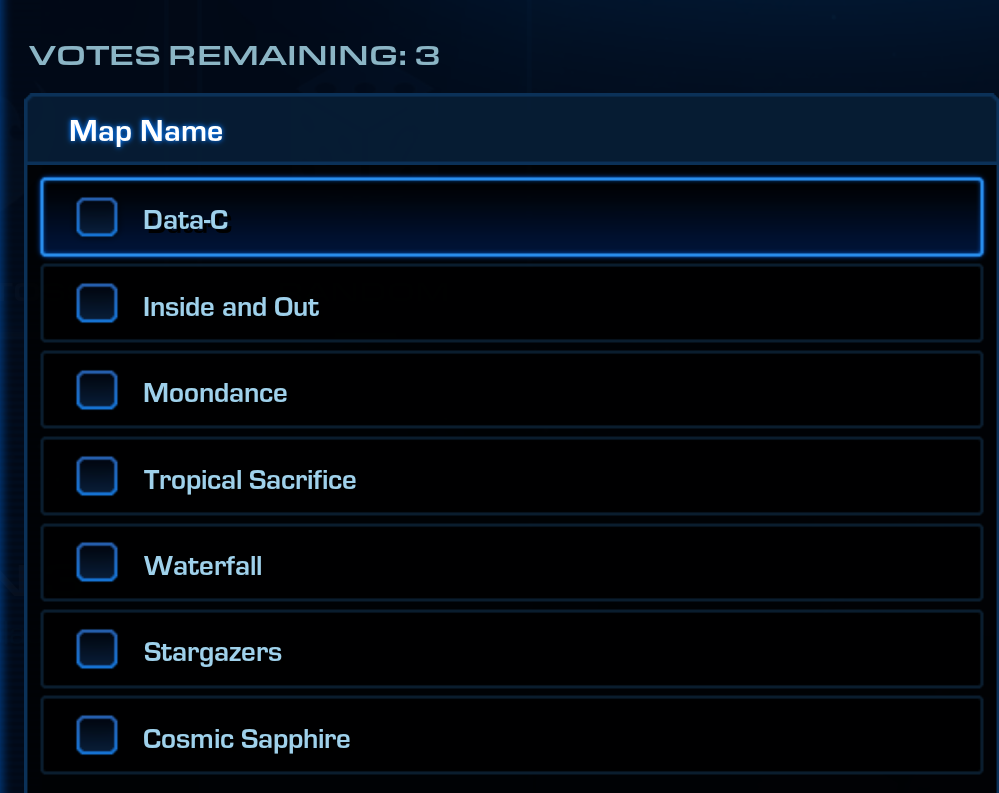
The vaunted Bo7 does not suffer or benefit from this. Every map gets played in a championship, and there is solid reasoning for this – fans want extended series to showcase the breadth of strategies and environments that StarCraft 2 offers. The removal of bans does this, but it also constrains map design and player strategic decision making in these longer series. A 9-map pool opens up all manner of solutions to this problem. Currently, all maps need to be reasonably balanced in all matchups lest they decide a hard-fought Bo7. The community at times has railed against such maps as Beckett (extremely unfavorable for Zerg vs Terran), Dasan Station (extremely favorable for Zerg vs Protoss), and others. They almost never saw competitive play and were swiftly removed from the map pool. Beckett is an exception to the swift removal, but that is more of a statement on an unchanging map pool than it is a statement on map perception.

A 9 map pool allows for interesting maps to exist – maps that are perhaps imbalanced in some matchups but provide interesting gameplay in others. All maps are currently limited in the amount of dead air space allowed around mineral lines due to the presence of a liberator – a 9 map pool allows for one map with more dead air space to exist, which would always be banned vs Terran. The nine map pool also allows for an even distribution of map archetypes across a pool.
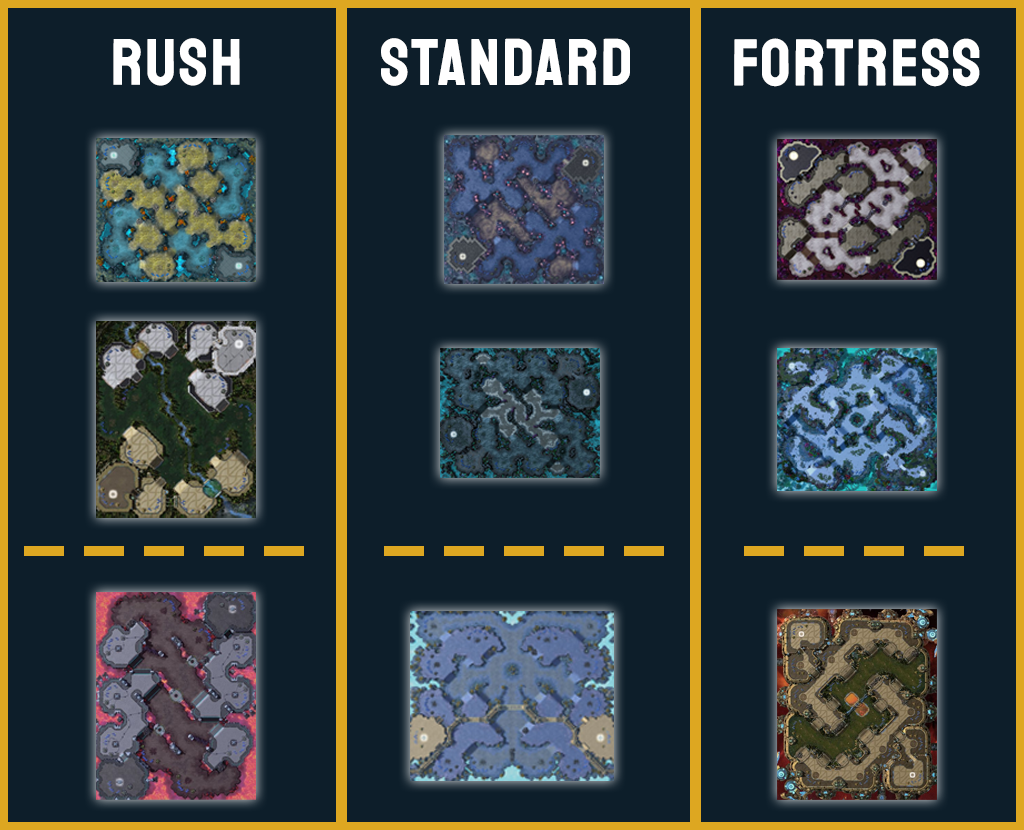
There are currently 3 main archetypes as I would define them. There are rush maps (Submarine, Beckett from recent map pools), standard maps (2000 Atmospheres as the most prominent example), and fortress/large maps (see: Glittering Ashes, Hardwire). Of course, these archetypes are not perfect. However, they do provide a decent framework for map pool design. A 9 map pool allows for an even distribution of 3 short, 3 standard, and 3 fortress maps in any map rotation. Even more impactful is the fact that 2 bans are guaranteed in even the longest series, so there are now opportunities for experimentation. Pride of Altaris would fit perfectly well in the fortress category as that category's experimental map – extremely viable in matchups not featuring zerg (recent meta changes mean that it appears to be viable against Zerg now as well). Golden wall would be a map allowable under the standard experimental category, and Beckett for short. I reference recent maps that have seen variable amounts of critical reception and success, but there are countless more that would work within this framework – and opening this freedom to mapmakers just increases the capacity for experimentation.
The 9 map pool is useful for a second reason as well – it allows for more series planning and playstyle differentiation in Bo7 series. There is something to be said for forcing every map in a pool to get played, but this proposed framework ensures at least one (and likely 2) of every archetype gets played while still allowing players the ability to shape the map pool to fit their playstyle or counter their opponents. It also ensures at least one experimental map is in a Bo7 pool.
Not only does this allow for more map experimentation and playstyle differentiation, it also creates storylines. One of the most interesting components of the Astralis reign of dominance in CSGO was their dominance on the rarely-picked Nuke map. It forced other teams to ban it out of respect for them and opened up their map pick/ban up tremendously, much like the Aui2000 techies did for Evil Geniuses’ TI5 run. It built storylines, and added additional subtext and interest to the maps/heroes being played. Will Astralis’ opponents ban Nuke and allow them that freedom in their map bans? Or do they practice a counter strategy for that team and/or player?
A nine map pool would increase the practice burden for players, but the players I spoke to viewed this as an acceptable cost in favor of the benefits discussed above. The addition of all nine maps to the ladder pool even alleviates the majority of this practice burden. Even if it did not, players practicing certain maps more than others increases the storyline potential in the format. Even more importantly, pros across servers that I have talked to almost uniformly support this change, even with the enhanced practice burden.
So, to sum it up – more maps means more bans and more map flexibility. It allows for players to define the story championships before the even starts, and opens the table for experimental maps that are precluded from existing in a 7 map pool due to single-matchup balance considerations. All of these contribute to competitive storylines, and add another interesting component to the viewer experience.